Ask most people how a business moves heavy loads around a big site and they name two things. A lorry, or a forklift. Both cost a lot, both are big, and for a surprising amount of daily work, neither is the right tool. If you have been trying to work out the cheapest way to move heavy loads on site, the answer may not be either of them.
Plantations figured this out a while ago, which is why so many estates now run a small electric hauler to move fruit and fertiliser in the field. But the same problem shows up far beyond the farm. Any operation with a large compound, a yard, or a spread of buildings has loads that need to move short distances, all day, often over rough ground, and usually with a person doing most of the lifting by hand or with a wheelbarrow.
It is work that sits in an awkward gap. Too heavy for a man with a trolley. Too small and too frequent to justify a lorry. Too outdoor or too far for a forklift. Here is where that gap shows up across different industries, and how businesses are filling it.
Source: KLSE Screener
Moving materials around a construction site
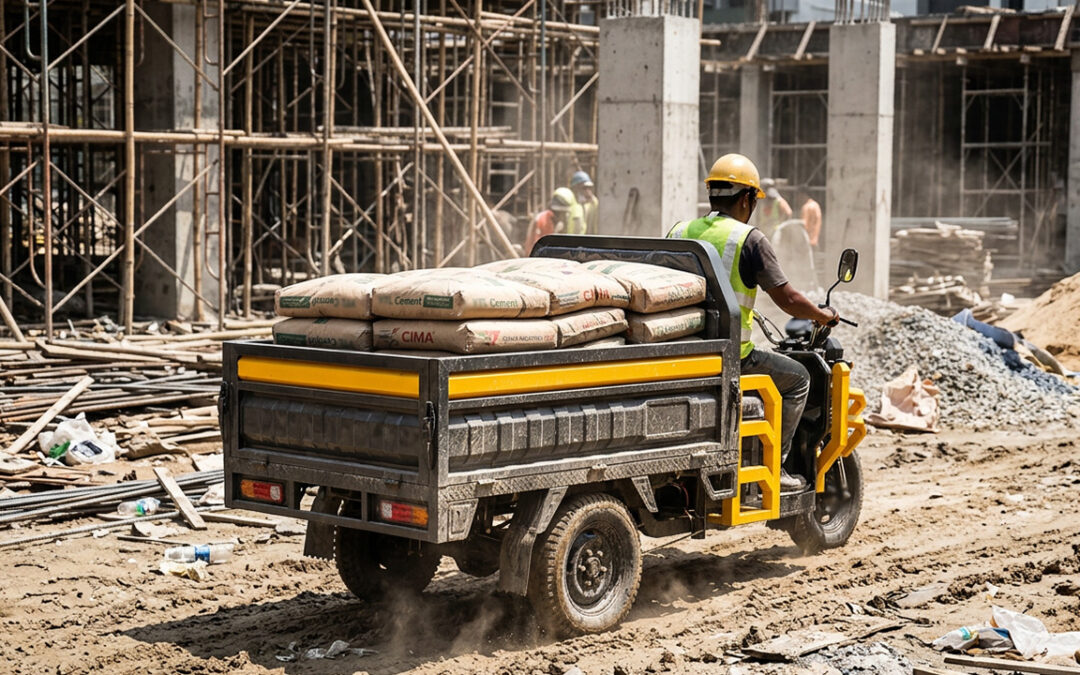
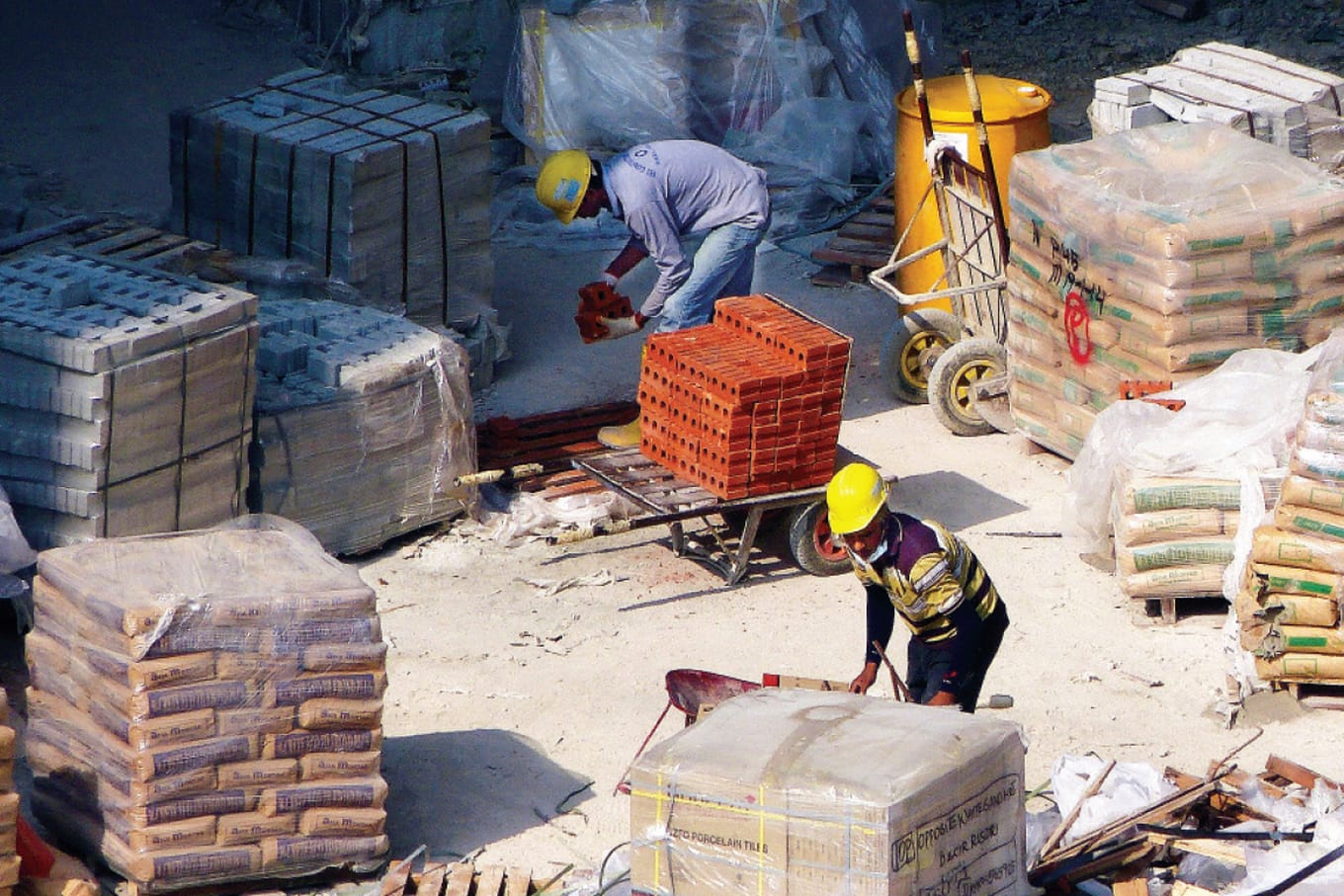
On a building site, materials never stop moving. Cement bags, bricks, steel, tools, and debris all need to get from the gate or the store to wherever the work is happening that day. A lorry drops everything at the edge and cannot follow the work inside. A forklift handles pallets but is clumsy for the constant small runs. So the job falls to workers carrying loads by hand across uneven, muddy ground, which is slow and wears people out fast.
What a site actually needs is a small hauler that can carry a few hundred kilograms at a time, turn tight, and handle rough terrain, moving materials right to the work point and hauling debris back out. For a lot of sites this is a cheaper, nimbler answer than tying up a lorry or a forklift.

Source: Pexels
Warehouse and factory yards: a forklift is not always the answer
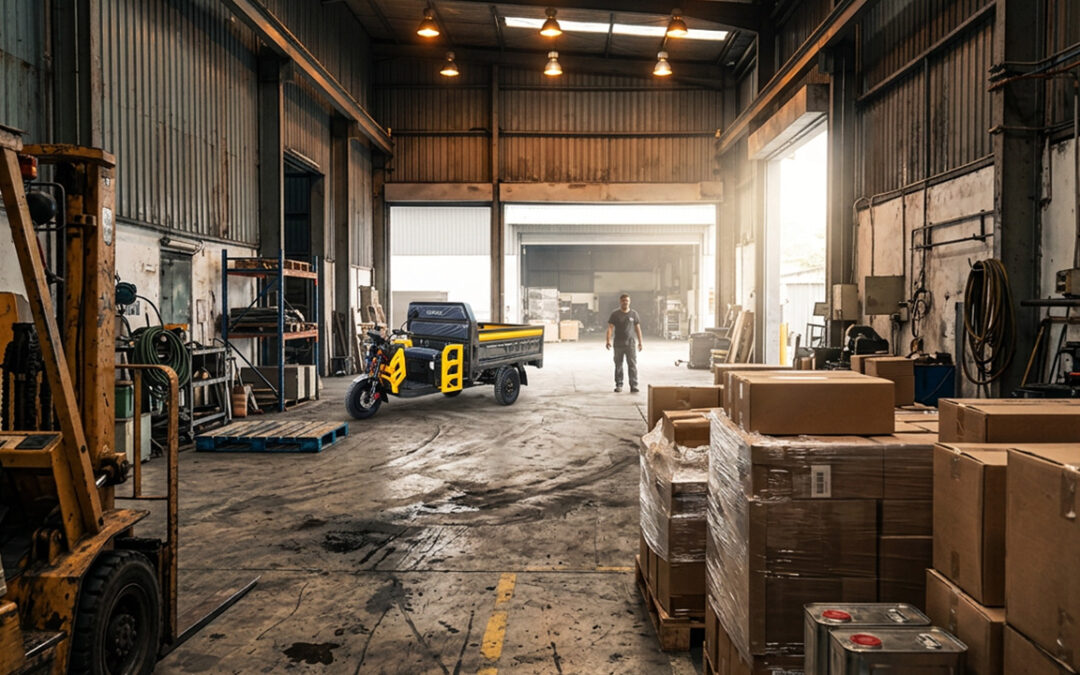
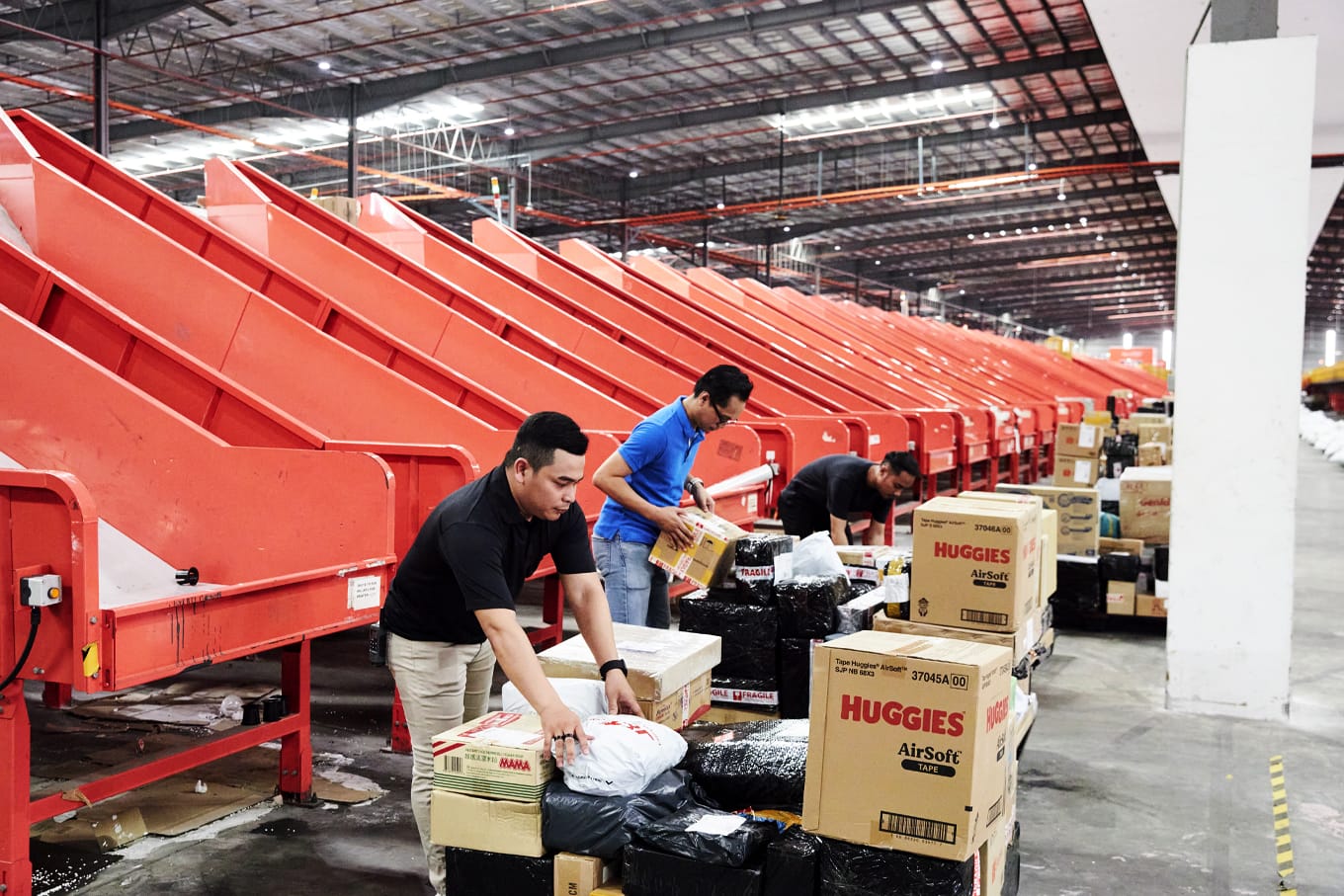
Inside a warehouse or factory compound, not everything moves on a forklift. There is a constant flow of smaller loads between buildings, out to the yard, over to the loading bay, across to the store. A forklift is overkill for this and awkward outdoors. A worker with a hand trolley is slow and limited to light loads.
For internal logistics like this, a small powered hauler that runs clean with no exhaust is ideal. It works outdoors around the yard and, being emission free, is safe to bring indoors too. One operator moving full loads between points replaces a lot of back and forth on foot, which is exactly why some yards look at it as a low cost forklift alternative for the jobs a forklift was never good at.
Source: Media OutReach
In-compound delivery inside large properties
Here is one that surprises people. A big share of delivery cost and effort is the very last stretch, and a lot of that stretch happens inside a single large property. Think of a gated community, a large campus, an industrial park, a resort, or a big commercial compound. Goods arrive at a central point, then still have to be spread out to units, blocks, and buildings across the grounds.
Doing that final in-compound leg by van is wasteful and often not even possible on internal paths. Doing it on foot is slow. A compact hauler that moves quietly across the property, carrying a full load from the drop point to each destination inside the grounds, solves exactly this. Because it stays within the private property, it fits this internal distribution role neatly.

Source: PropertyGuru
Gated communities and property maintenance rounds
Any managed community or large facility has a maintenance team that spends the day moving things. Garden waste, tools, cleaning equipment, replacement parts, bulky rubbish. Golf buggies are too light for real loads. A pickup is too big and too noisy to run around residential grounds all day.
A quiet, emission free hauler with a real cargo bed lets a small team do maintenance and waste rounds across the whole property without the noise of an engine, and without straining to carry everything by hand. It is effectively a motorized wheelbarrow with far more capacity and none of the pushing.

Source: Reuters
Recycling, scrap and depot collection
Collection work is all about weight and volume over short, repeated trips. Recyclables, scrap, and bulky waste get gathered around a yard, a depot, or a facility and moved to a central point. It is heavy, repetitive, and usually done manually or with a diesel vehicle that is expensive to keep running for stop start work.
A battery hauler suits this pattern well. Lots of short trips, heavy loads, no fuel burned idling between stops, and low running cost for work that never really ends.
The vehicle behind all of this
Across every one of these jobs, the need is the same. Something bigger than a trolley or wheelbarrow, smaller and cheaper than a lorry, able to go where a forklift or van cannot, and able to carry real weight over rough private ground all day.
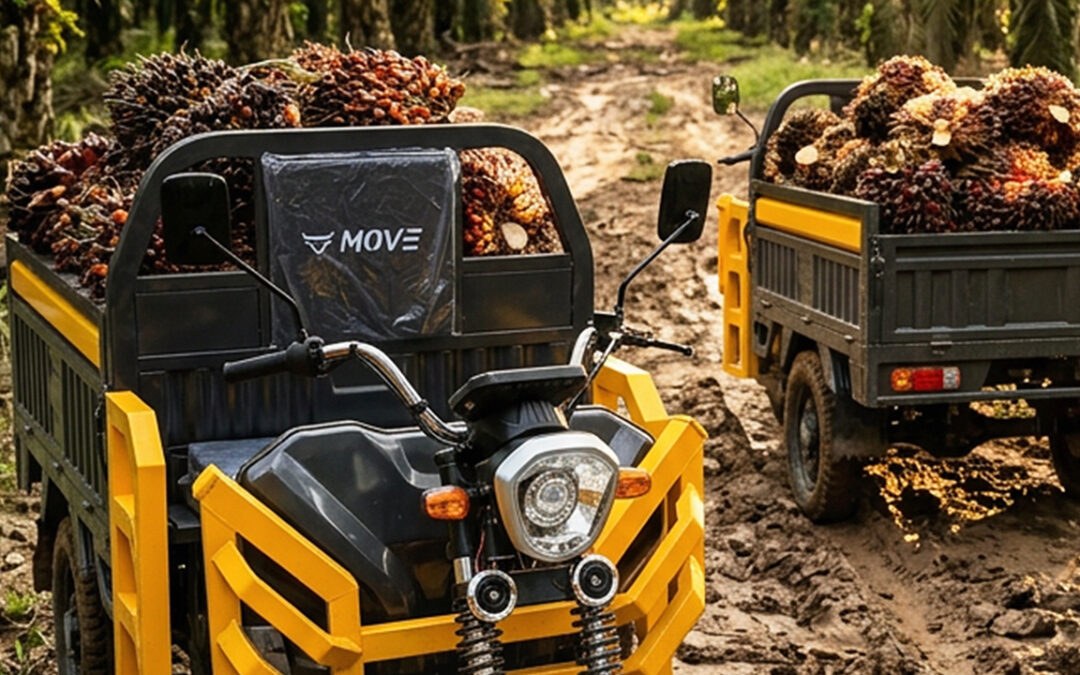
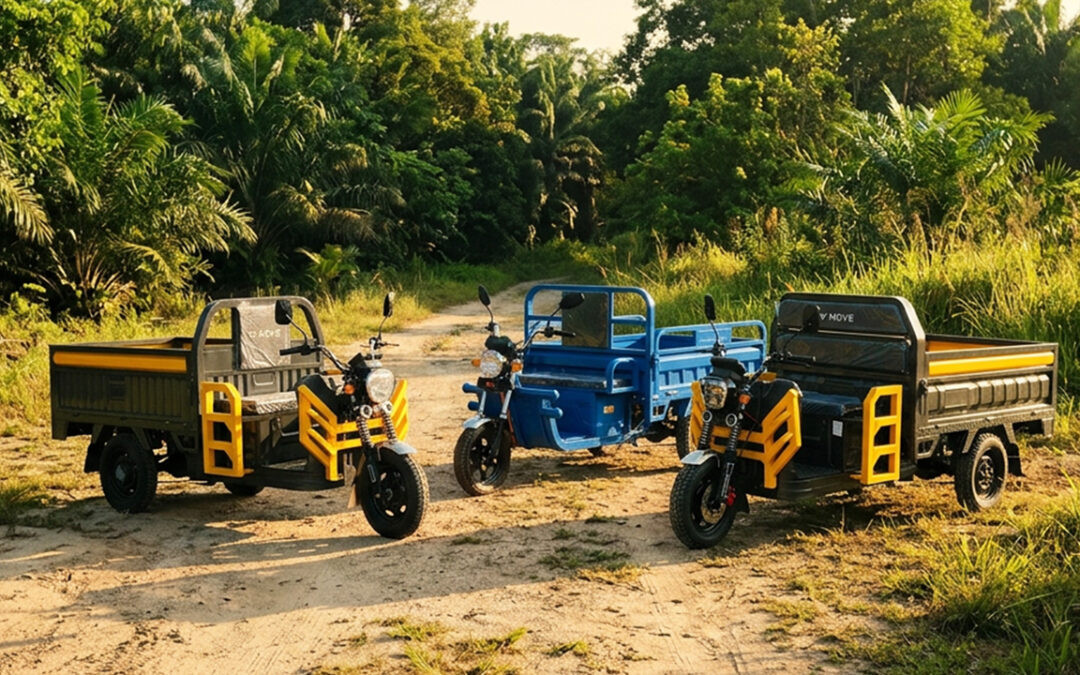
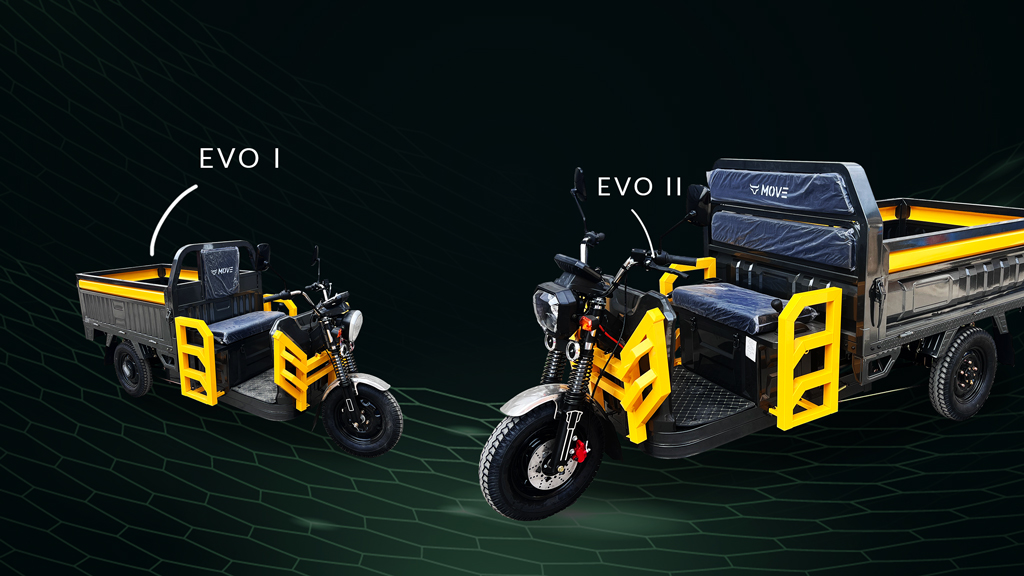
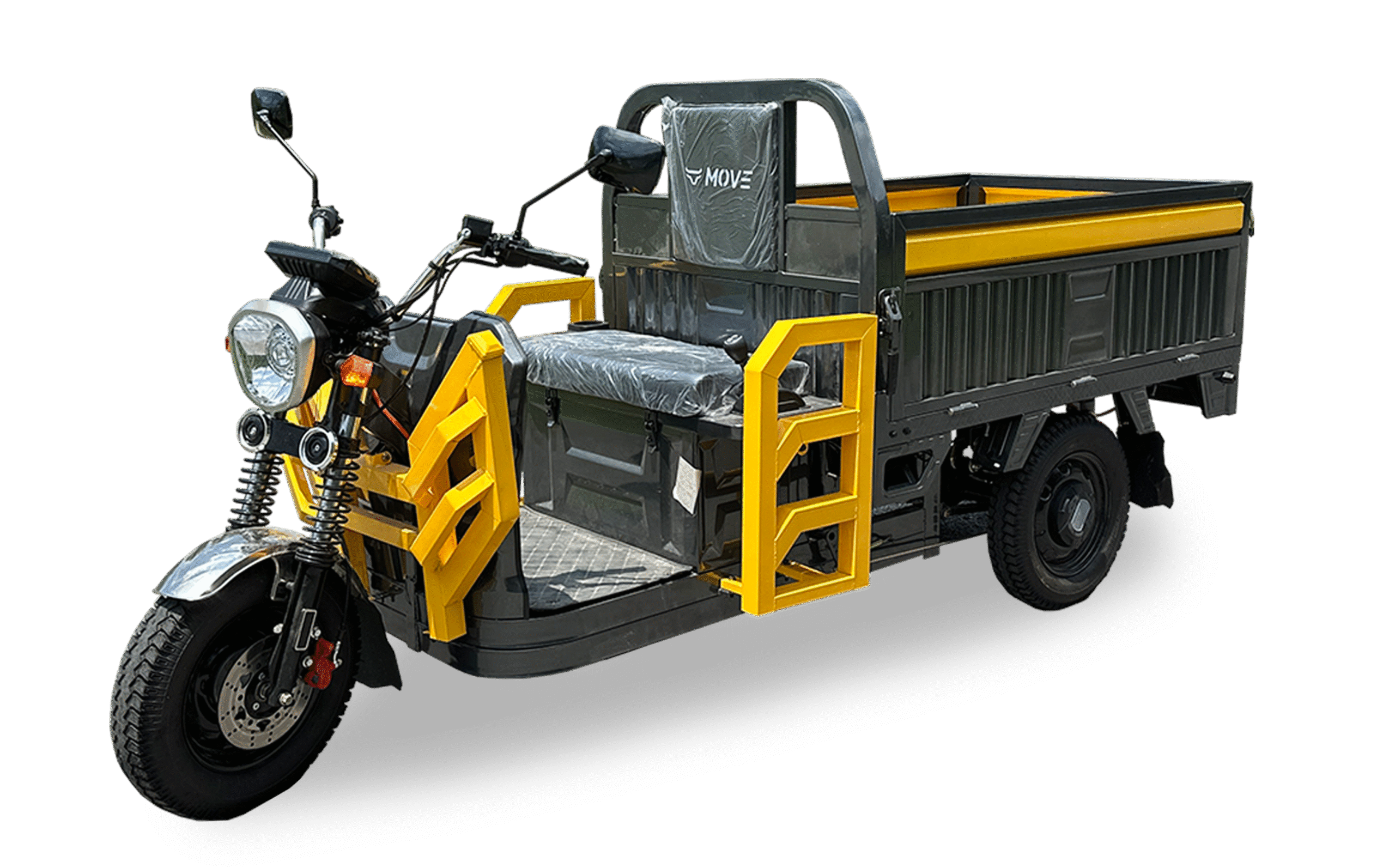
The vehicle that fits this description is an electric cargo tricycle, sometimes called a mini cargo truck or an electric hauler. It is a compact, three wheeled, battery powered work vehicle with a proper cargo bed, built for hauling rather than for the road. Plantations adopted it first, but as the use cases above show, the same machine earns its keep on worksites, in warehouses, inside communities, and around depots.
A few things make it work for this kind of duty. It is compact enough for tight paths and tight turns. It has the ground clearance and suspension for rough, unpaved surfaces. It runs on a battery, so there is no fuel bill and nothing to service on an engine. And a serious model carries a real load rather than a token one.
On that last point, watch the capacity closely. Many cheap imported units stop around 300 kilograms, barely more than a large cart. The MOVE EVO range carries up to 1,000 kilograms in a single trip, which is what makes it a genuine work vehicle rather than a toy. You can compare the two models in our EVO I and EVO II guide, or see the EVO I and EVO II directly. If you want the full breakdown of what these cost, our price and specs buying guide lays it out.
Built for your grounds, not the highway
One thing to be clear about. This kind of vehicle is built for work on your own grounds, across your site, yard, compound, or community. That off road, on property focus is exactly why it fits all the jobs above, and why it is simple to put to work.
Local support matters here as much as the vehicle itself. An electric cargo tricycle that breaks down mid shift is useless if the part has to come from overseas. MOVE units are assembled in Nilai, Negeri Sembilan, with local parts and local after sales support, so a fault gets sorted in days rather than weeks.
Frequently Asked Questions
What is the cheapest way to move heavy loads around a site?
For short, repeated trips across your own grounds, a compact electric cargo tricycle is usually cheaper than running a lorry or a forklift. There is no fuel bill, low maintenance, and one operator can move full loads all day. The best way to know is to compare it against what you currently spend on labour and diesel.
Can an electric cargo tricycle replace a forklift?
Not for stacking pallets or lifting to height. But for the constant job of moving materials across a yard or site, where a forklift is slow, awkward, or stuck indoors, a cargo tricycle often does that work faster and cheaper.
How much can it carry?
The MOVE EVO range carries up to 1,000 kilograms in a single trip, far more than a wheelbarrow, a hand trolley, or most cheap imported three wheelers that stop around 300 kilograms.
Is it only for farms and plantations?
No. Plantations adopted it early, but the same vehicle is used on construction sites, in warehouse and factory yards, for in-compound delivery, on gated community maintenance rounds, and for recycling and depot collection.
Is it meant for public roads?
It is built for off road work on your own grounds, site, yard, or compound, which is where all the jobs above take place.
See if it fits your operation
If any of the jobs above sound like your daily reality, the honest next step is to look at your own numbers. Count how many loads you move by hand or by diesel vehicle each day, and how much that costs you in labour and fuel. Then compare it against one operator and one electric cargo tricycle doing the same work.
Our Fuel Calculator gives you a quick view of the fuel saving. To see one work on your own ground, get in touch and tell us about your site and what you need to move, and we will help you work out whether it fits.