Most Malaysian factory managers who ask about electric work vehicles start with the same question: I already have a forklift. What does this do that the forklift does not?
It is the right question. A forklift lifts pallets at the dock. An electric work vehicle moves goods across the compound: from receiving to the production line, between stations, from packing to outbound. These are different jobs, and running both on a forklift is where the inefficiency quietly builds up.
You Already Have a Forklift. So What Does the EVO Actually Do?
Most Malaysian factories that contact MOVE already have a forklift. The forklift is not going anywhere. The question is what the EVO does that the forklift does not.
A forklift is built for one job: lifting pallets vertically at the loading dock. It does that job well. It is not built for general compound transport across a factory floor. Running a forklift for short horizontal trips, repeatedly, all shift, is expensive and inefficient. Forklift operators are certified and often in short supply. The machine itself burns through maintenance hours when used for work it was not designed for.
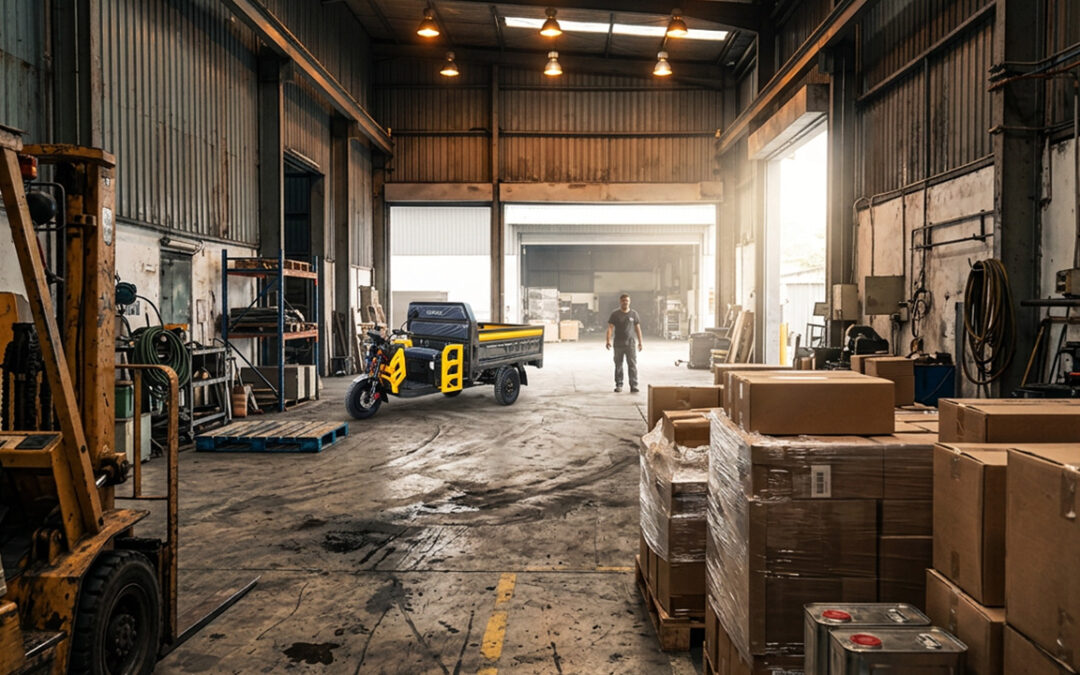
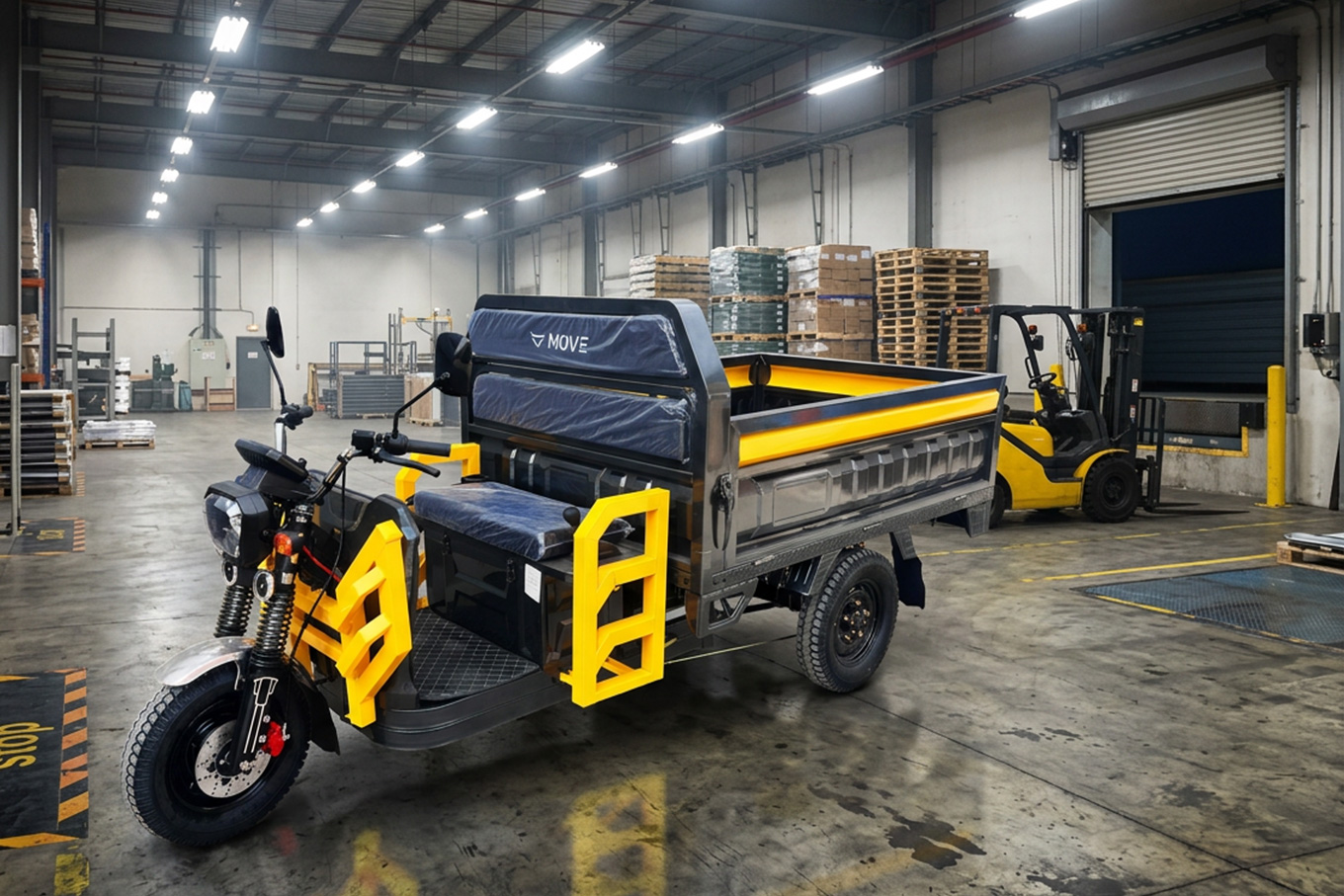
The EVO fills the transport gap between the loading dock and the rest of the factory. It carries materials from receiving to the production line. It moves work-in-progress between stations. It brings finished goods to packing and outbound. It handles the maintenance rounds, the consumable restocking, the tool deliveries across the compound. None of that requires a certified forklift operator. Any worker can drive it, because it does not need a road license or any special certification.
The practical split most Malaysian factories land on: forklift stays at the dock, EVO handles everything inside. The forklift does fewer trips at higher utilisation. The EVO removes the dependency on the forklift for jobs it was never meant to do. Both assets perform better when they are each doing what they are built for.
What a Factory Compound Actually Moves Every Day
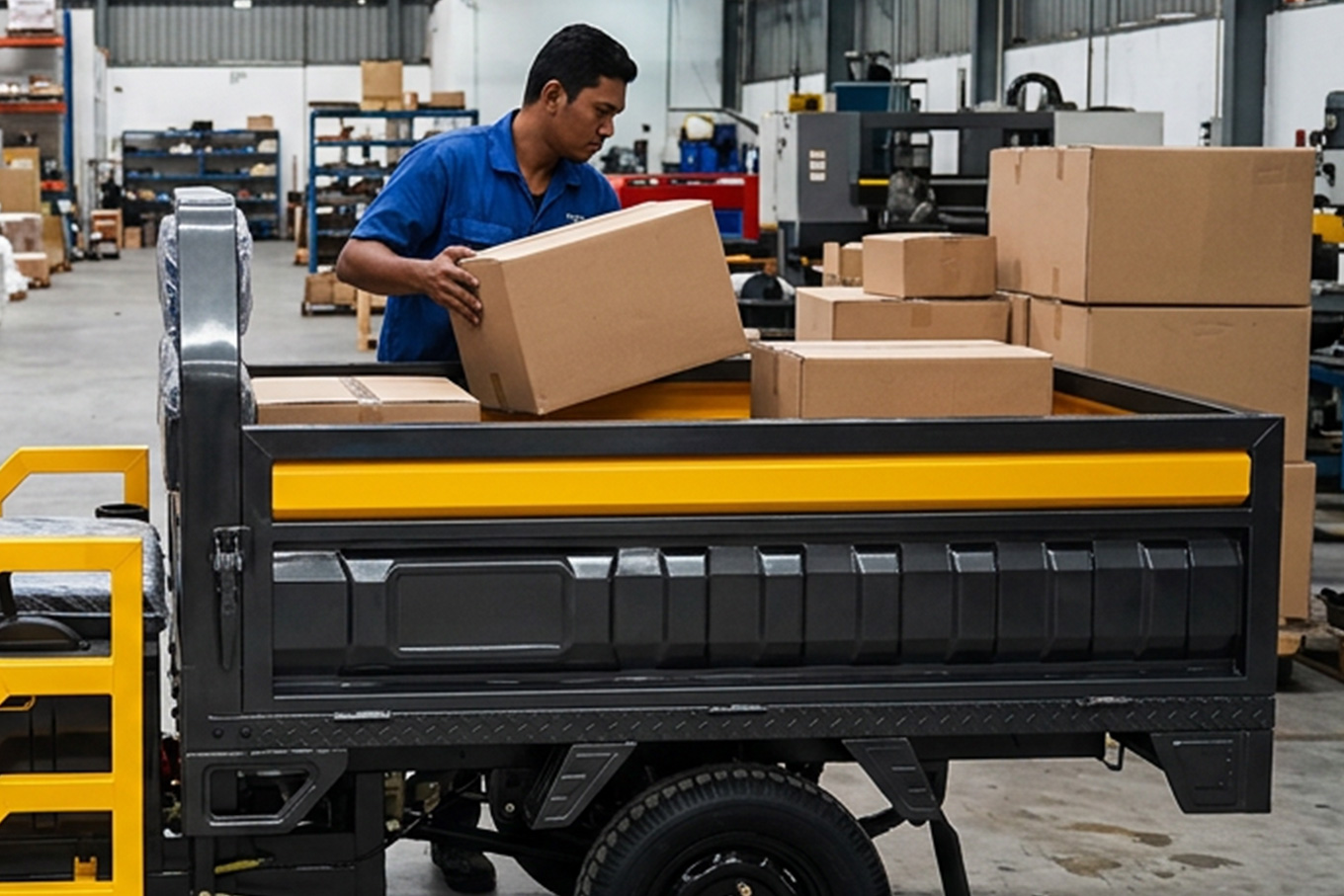
Raw materials come in at the receiving dock and need to reach the production line. Work-in-progress moves between stations. Finished goods go to packing and then to outbound dispatch. Spare parts, tools, consumables, and maintenance supplies travel across the compound all shift. Scrap and waste go the other way at the end of the day.
Most of that movement happens in short runs, with heavy loads, in spaces that get tighter once equipment, racking, and production infrastructure are in place. Manual trolleys are slow and wear out workers over a long shift. The diesel compound runner fills the gap but brings its own costs.

The Real Cost of Short-Haul Diesel Work Inside a Compound
A diesel engine doing 30-metre runs inside a compound all day never reaches its efficient operating temperature. Fuel consumption on stop-start factory work is far higher per distance covered than the manufacturer’s figures suggest. The engine is not designed for this duty cycle.
Maintenance costs follow the same pattern. Constant starting and stopping wears the engine faster than highway running. Add oil changes, filters, injector service, and the breakdown that always happens at the worst time. The diesel compound runner that looked cheap when you first brought it in costs real money every month to keep going.
For factory compounds with enclosed or semi-enclosed areas, exhaust fumes add a separate problem. Ventilation requirements, occupational safety regulations, and basic working conditions all push in the same direction: a vehicle without an exhaust pipe is the cleaner and simpler option for indoor industrial use.
Diesel Compound Runner
- ✗Fuel cost on every short trip
- ✗Engine never reaches efficient temperature on short runs
- ✗Exhaust fumes in enclosed areas
- ✗Regular oil, filter, injector servicing
- ✗Unplanned breakdowns disrupt production
- ✗Overseas parts wait if it's an import
MOVE EVO Electric Work Vehicle
- ✓Zero fuel cost per trip
- ✓Battery performs the same on short runs as long ones
- ✓No exhaust, suitable for enclosed factory use
- ✓No engine to service, no oil changes
- ✓Charge overnight, full shift the next day
- ✓Assembled in Nilai, local parts and service
Electric Work Vehicles for Factory Use: What the Switch Looks Like in Practice
An electric cargo vehicle running on a battery costs nothing per trip in fuel. For stop-start, short-haul, heavy-load work inside an industrial compound, this is a better match for the actual duty cycle than any diesel equivalent. The battery does not care whether you run 50 metres or 500 metres. It delivers the same torque at the start of the shift as at the end.
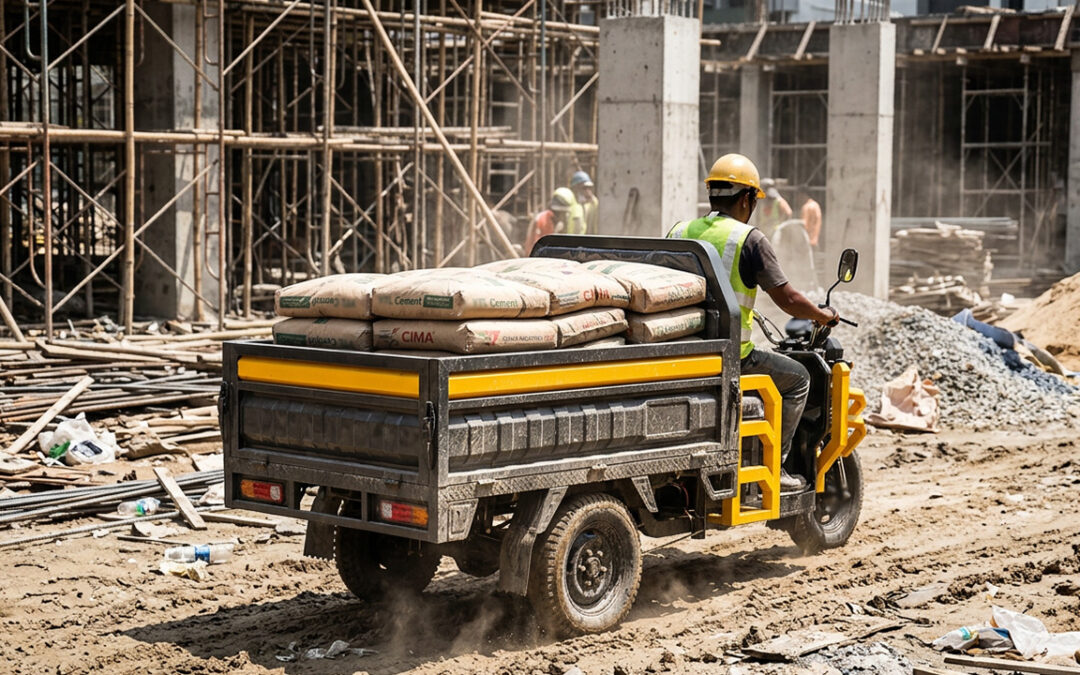
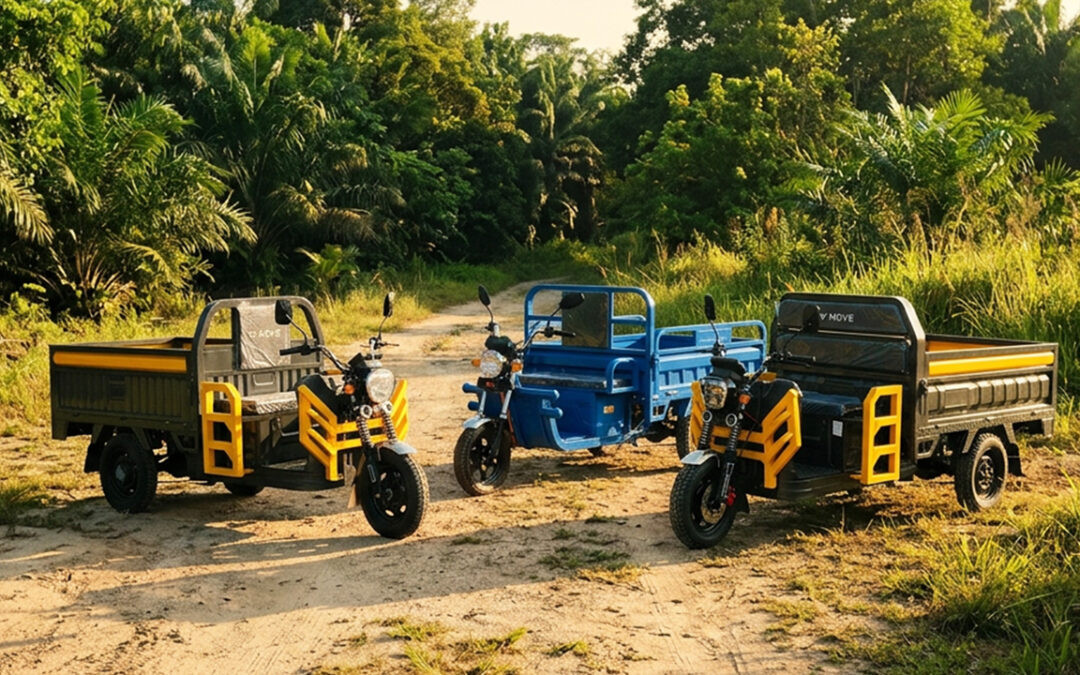
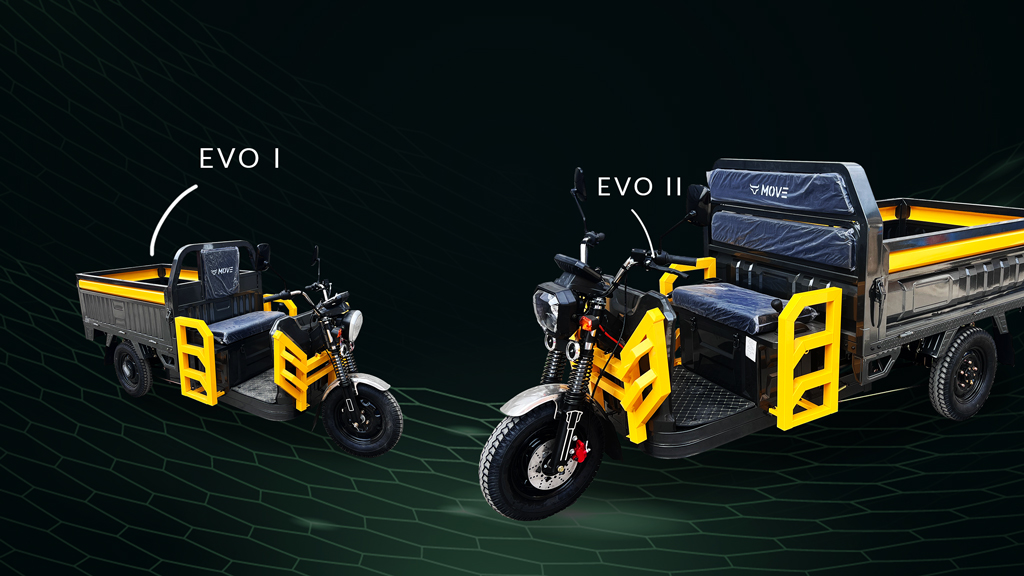
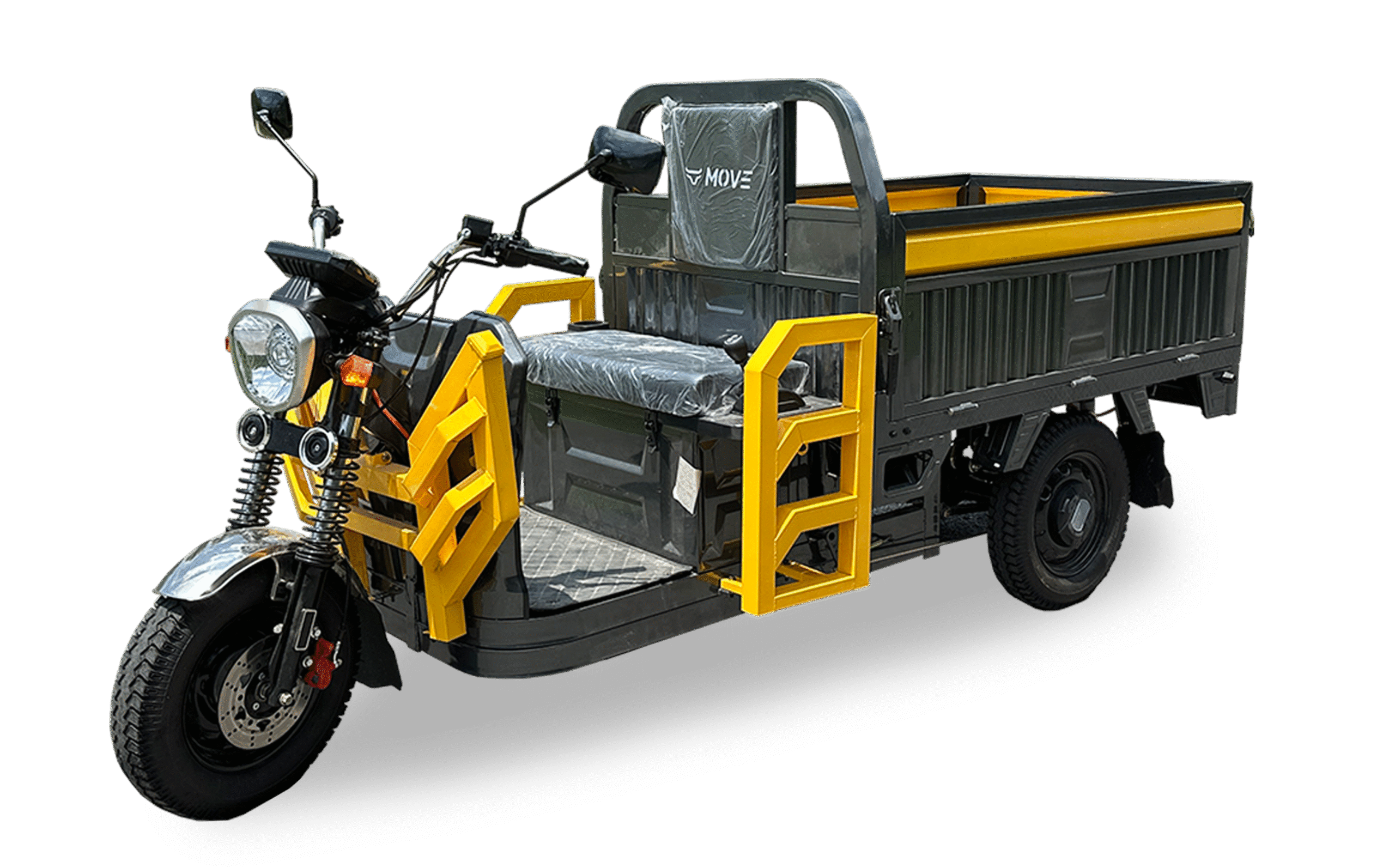
The MOVE EVO II carries 750kg per run, which covers the bulk of what Malaysian factory compounds need to move between points. For heavier industrial loads, the EVO II Pro handles up to 1,000kg. Both are electric industrial vehicles assembled locally in Nilai, Negeri Sembilan, which means parts and service are available without an overseas wait.
There is no engine to service. No oil, no injectors, no exhaust system, no cooling circuit. A typical diesel compound runner costs RM 300 to RM 600 per month in fuel and maintenance combined. That number climbs when the vehicle is older and doing constant cold-start, stop-start work.
The EVO I and EVO II share the same 60V/80AH lithium battery. For factory compound use, where the vehicle covers short internal distances each day, one charge typically lasts several working days. Monthly electricity cost is low, significantly less than RM 100 per month even with regular use, and often under RM 30 for standard compound operations. The EVO II Pro runs a larger 72V/130AH battery with more range; electricity cost will be higher per charge but the longer cycle means you charge less often. Put your own numbers into the Fuel Calculator to see the payback period for your compound.
From Order to Running in Your Compound: No Paperwork, No Wait
Most industrial equipment purchases involve a delay before you can actually use what you bought. Forklifts require certified operators and DOSH-registered inspections. Diesel vehicles need road registration, road tax, and insurance before they can move inside a compound legally. New machinery often needs safety sign-off before workers can operate it.
The MOVE EVO works differently. It is classified as an off-road vehicle. There is no road registration. No road tax. No requirement for a road-legal driving license. When the unit arrives at your factory, any worker can operate it the same day.
The only thing you need is a standard 240V outlet for overnight charging. No charging station, no electrical infrastructure upgrade, no installation lead time. A full charge takes 7 to 8 hours. The built-in BMS cuts power automatically at 100%, so you plug it in at end of shift and it is ready at the start of the next one without any monitoring.
For factory managers who have dealt with procurement cycles that stretch weeks before an asset is actually operational, this is a meaningful difference. The decision-to-deployment gap on an EVO is as short as the delivery time from Nilai to your compound.
What About an Electric Pallet Truck?
A fair question. Electric pallet trucks cost around RM 8,000 to RM 12,000, do not need a license, and work well on smooth indoor surfaces. For a pure indoor warehouse running flat loads on pallets, they are a reasonable option.
The difference shows up once your compound involves anything outside the warehouse floor. Loading bay ramps, outdoor access roads between buildings, uneven ground between sections, kerb transitions: pallet trucks are not built for mixed terrain. They are also limited to moving loads that sit flat on a pallet. For factories where goods are loose, in bags, in boxes, or in irregular containers, a cargo tricycle with a flatbed or cargo box is more practical.
The EVO functions as an electric utility vehicle for the full compound, not just the warehouse floor. It carries more per trip than most pallet trucks at equivalent price points, and it handles the terrain that pallet trucks cannot. If your compound runs any part of its operation outside a perfectly flat warehouse, the pallet truck will reach its limits faster. If you want to compare your specific situation, bring this up when you contact MOVE.
Frequently Asked Questions
Does it handle standard factory floor surfaces?
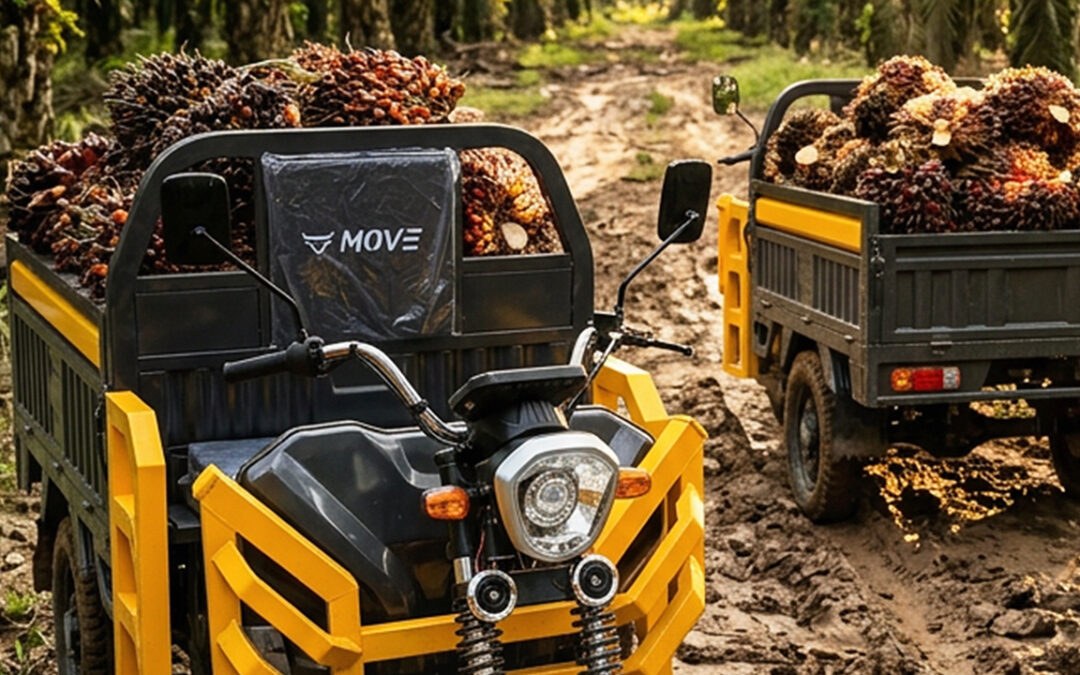
Yes. Smooth and semi-smooth indoor surfaces are well within the EVO’s operating range. The suspension is engineered for off-road and outdoor plantation use, so a factory floor is an easier condition. It also handles loading bay ramps and the transition between indoor and outdoor compound areas without issue.
How long does it take to charge, and is it safe to leave plugged in overnight?
The EVO I and EVO II both use a 60V/80AH battery and take around 7 to 8 hours to fully charge from a standard 240V outlet. The EVO II Pro has a larger 72V/130AH battery; charging time will be longer. Confirm the exact figure with MOVE. All models include a built-in BMS (Battery Management System) that cuts the charge automatically at 100%, so you can plug in at end of shift and leave it overnight without monitoring. No dedicated charging station required.
Does it need road registration or a driving license?
No. The MOVE EVO is classified as an off-road vehicle. It does not require road registration, road tax, or a road-legal driving license to operate inside a factory compound or industrial site. You can deploy it and have it running the same day without any administrative process.
How does it compare to a forklift for compound material handling?
A forklift is designed for vertical lifting and pallet handling at the loading dock. It is not built for general horizontal transport across a compound. For moving goods repeatedly between points, an electric cargo vehicle is more practical, costs less to buy, has lower maintenance, and does not require a certified forklift operator to run.
What is the price, and how long is the payback period?
The EVO I starts from RM 11,600. The EVO II and EVO II Pro are priced higher based on capacity. Contact MOVE for current pricing. For payback period, the Fuel Calculator takes your actual diesel and maintenance spend and shows the real numbers for your operation, not a generic industry estimate.
What is the warranty, and what happens if something goes wrong?
MOVE covers the EVO with a 2-year structural and whole-vehicle warranty, and a 1-year parts warranty. Units are assembled in Nilai, Negeri Sembilan. For industrial vehicles Malaysia-wide, local assembly means the parts chain is short: most service requests are resolved within days, not weeks. If you have dealt with imported equipment sitting idle waiting for overseas shipments, the difference is real. Contact MOVE directly for service coverage details specific to your location.
Most factories running a diesel compound vehicle inherited it as a habit rather than a choice. The vehicle was there, it did the job, and nobody added up what it was actually costing per month in fuel, servicing, and the lost time when it went down. Running that comparison against an electric work vehicle, with your own numbers, is usually where the decision becomes straightforward.
See it for yourself in Nilai, or start with the spec sheet
Tell us what your factory compound needs to move and how the work is split today. We will help you work out whether the EVO fits alongside what you already have.
WhatsApp us at +6018-650 6061 or get in touch to request a spec sheet or discuss which model suits your operation.